


Cutting-Edge Digital Marketing Strategies to Stay Competitive
Think your business needs fancy chatbots and complex marketing funnels to succeed online?
Think again.
The truth is, most small businesses waste time chasing shiny new tools while overlooking the basics that actually work.
From content marketing to SEO, the most effective digital marketing strategies are surprisingly simple. We’ve spent years helping businesses grow online, and are ready to share the most impactful approaches.
In this guide, we’ll cover practical digital marketing strategies you can put into place right away. It’s time to help your business gain online traction and expand reach.
Let’s get started.

chapter one
Understanding Digital Marketing Strategies
What Is a Digital Marketing Strategy?
Essentially, digital marketing strategies are roadmaps that show exactly how you’ll use different online channels to reach the right people and turn them into customers.
In other words? It’s your master plan for online success.
It’s becoming more important than ever, too—experts predict worldwide spending on digital advertising will surge to $734.59 billion by the end of this year, showing just how seriously businesses are taking their online presence.
This growing importance is reflected in marketing budgets, too.
Nearly half of all marketers (46.2%) are pumping more money into their digital marketing efforts to:
- Boost revenue
- Build customer trust
- Drive online sales
And this upward trend isn’t slowing down anytime soon.
But what makes a strategy different from other marketing terms you might hear? Let’s break it down:
| Term | Definition | Example |
|---|---|---|
| Marketing Strategy | Your long-term marketing plan and approach | Becoming the #1 trusted source for fitness advice in your industry |
| Marketing Tactics | The specific efforts you take to make your strategy work | Creating helpful workout videos and writing easy-to-follow nutrition guides |
| Marketing Campaigns | Short-term projects with clear goals | Running a 6-week summer fitness challenge to get more gym sign-ups |
The right strategy ties all these pieces together, making sure everything you do online helps reach your business goals.
Key Types of Digital Marketing
Here are the most effective types of digital marketing you should consider for your business:
1. Content Marketing
Content marketing focuses on creating content to solve real problems your audience is actively searching for online.
Businesses that prioritize content marketing generate 67% more leads than those that do not, making content one of the most effective long-term growth channels.
Instead of pushing sales messages like “buy this/that,” you’re helping customers while promoting your business.
Here’s how this works.
Say you run an online computer parts store.
Instead of just listing your products, you could write helpful articles about problems your customers are actually Googling, like:
- “Why is my computer so slow?”
- “How to build a computer from scratch”
- “Best ways to speed up an old computer”
These aren’t random topics—thousands of people search for these exact phrases every month.
Here’s where it gets interesting: while helping solve these problems, you can naturally recommend relevant products from your store.
If someone’s computer is running slow, you might explain how adding more RAM or switching to a solid-state drive could help—products you happen to sell.
This approach works in any industry. Take real estate, for example.
Instead of writing about your latest industry award (which, let’s be honest, potential buyers don’t care about), you could create content about:
- Steps to buying your first house
- How to invest in real estate for beginners
- Minimum credit score needed for a mortgage
These topics not only attract lots of traffic, but also reach people who are actively looking to buy or invest in property—exactly the audience you want to reach.
The key to great content marketing is providing real value through:
- Blog posts that solve specific problems
- Videos that demonstrate solutions
- Podcasts featuring expert advice
- In-depth guides and tutorials
- Case studies showing real results
Remember, 84% of consumers expect companies to create content that either entertains or helps them solve problems. Additionally, 70% of consumers prefer learning about a company through educational content rather than traditional advertising.
When you focus on creating genuinely helpful content, you’ll naturally attract more interested customers without having to hard-sell them.
2. Search Engine Optimization (SEO)
Want your website to show up when people search for products or services like yours?
That’s exactly what SEO marketing services help you achieve: they aim to increase your website’s visibility on search engines like Google.
Think of SEO as making your website both human-friendly and search-engine-friendly. You need both to succeed. When done right, SEO can bring you consistent traffic without paying for ads. Organic search accounts for approximately 53% of all website traffic, making SEO one of the most valuable digital marketing investments.
Here’s what good SEO looks like in practice:
- Creating content that answers people’s questions
- Making your website load quickly and work well on mobile phones
- Getting other reputable websites to link to yours
- Using words and phrases your customers actually search for
The best part?
Unlike paid advertising, SEO can bring you long-term results that continue even when you’re not actively working on it. SEO not only drives traffic but also delivers higher conversion potential, with inbound leads closing at significantly higher rates than outbound tactics.
Fun Fact: 68% of all online experiences begin with a search engine!
3. Pay-Per-Click (PPC) Advertising
This advertising approach is exactly what it sounds like—you only pay when someone clicks on your ad.
PPC ads are like putting up a billboard, but instead of paying for the space, you pay only when someone shows interest. You can run ads on search engines like Google or social media platforms like Facebook.
The beauty of PPC is its immediacy and precision.
Need more customers this week? PPC can help.
Want to target only people in your city who are interested in organic food? PPC can do that, too.
Consider these benefits:
- You get $2 back for every $1 spent (on average)
- Your ads appear at the top of search results
- You can start and stop campaigns instantly
- You control exactly how much you spend
- You can target very specific audiences
The key to success with PPC is starting small, testing what works, and scaling up your successful campaigns.
4. Social Media Marketing
Social media isn’t just for sharing cat videos anymore—it’s a powerful way to connect with your customers where they already spend time.
It’s also a great way to showcase brand personality and build relationships through relevant, engaging content.
With more than 5.24 billion people using social media worldwide, your potential customers are definitely scrolling through their feeds right now.
Take Dossier, for example.
They understand that social media is about building connections first, selling second.
Different platforms serve different audiences, and each has its own special power:
- LinkedIn is where you’ll find business professionals and decision-makers
- Instagram shines when you’re showing off visual products and lifestyle content
- TikTok is perfect for reaching younger audiences with creative, entertaining content
- Facebook gives you the widest reach across different age groups
You don’t need to be everywhere at once. In fact, trying to maintain a presence on every platform usually leads to mediocre results everywhere.
Instead, pick one or two platforms where your target audience hangs out most, and focus on creating quality content there.
It’s better to be amazing on Instagram than average on five different platforms.
5. Email Marketing
Email might seem old-school, but it’s still one of the most effective ways to reach your customers.
Why? It fosters personalized communication and focuses on building customer relationships: the key to driving loyalty and success.
For every $1 you spend on email marketing, you can expect to get $36 to $42 back —that’s an amazing return on your investment!
What makes email marketing so powerful?
It’s personal, direct, and you own your email list (unlike social media followers that platforms control).
Here’s how to make email marketing work for you through marketing automation:
- Send welcome emails to new subscribers
- Share your best content regularly
- Offer exclusive deals to your email list
- Keep in touch with customers after they buy
- Ask for feedback and reviews
The secret is to treat your email list like a community, not just a sales channel.
Share valuable information, engage with replies, and make subscribers feel special.
In the meantime, also learn how to make cold email work for your business (it still works—you just have to know how to do it right!).
6. Influencer Marketing
Working with influencers isn’t just for big brands anymore.
Think of influencer marketing as getting a trusted friend to recommend your product—except that friend has thousands or even millions of followers who trust their opinion.
According to marketing trends for 2025, influencer collaborations will become even more crucial for businesses of all sizes.
The best part?
You don’t need to partner with celebrities.
In fact, micro-influencers (those with 1,000 to 50,000 followers) often generate better results because:
- Their audiences are more engaged
- They have higher trust levels with their followers
- They’re more affordable for small businesses
- They often focus on specific niches
The key to success is finding influencers whose followers match your target audience.
For example, if you sell cooking supplies, partnering with food bloggers or home chefs would make more sense than working with fashion influencers.
7. Video Marketing on YouTube
YouTube isn’t just a video platform—it’s the world’s 2nd-largest search engine, making it a goldmine for reaching people actively looking for solutions. With more than 2.7 billion monthly users, YouTube provides unmatched reach for educational and product-focused content.
Think about how you use YouTube yourself—when you want to learn something new, it’s often your first stop, right?
Let’s take a look at a real-world example.
Every month, around 40,300 people worldwide search for “makeup for beginners” on YouTube
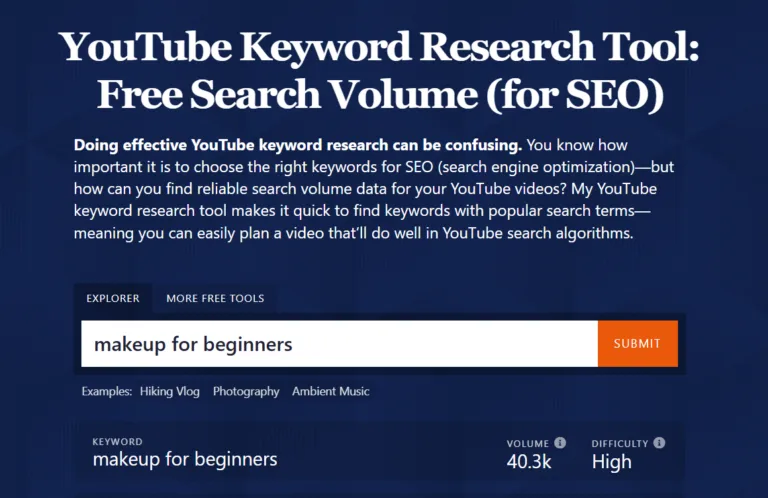
That’s 40k+ potential customers looking for guidance!
Smart makeup retailers and affiliates can tap into this audience by creating helpful tutorial videos.
Take beauty vlogger Haley Kim, for example—she created a beginner-friendly makeup tutorial that now ranks #1 for this search term and has attracted over 1.5 million views
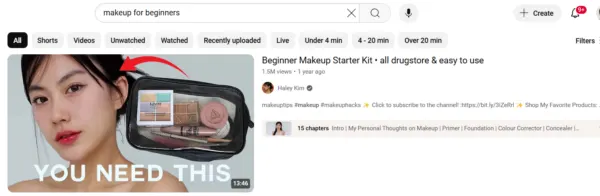
Throughout her videos, she naturally recommends specific products and includes purchase links in the description.
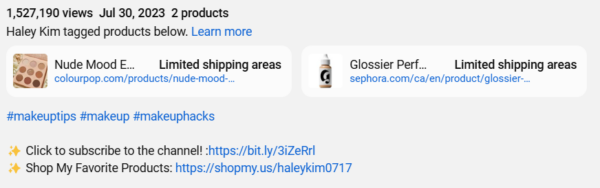
This isn’t just helping viewers—it’s driving sales.
What makes YouTube marketing particularly effective:
- Your videos can demonstrate products in real-world situations
- You can create detailed how-to content that really helps viewers
- Once published, videos continue working for you for years
- YouTube videos often show up in Google search results, too
- You can build a community of subscribers who trust your recommendations
Here’s the best part: you don’t need expensive equipment or professional production values. Today’s smartphones offer great video quality.
What matters most is being helpful and authentic—a simple, well-lit video showing how to use your product often performs better than a glossy commercial.
8. Forums and Community Boards
Communities like Reddit, Quora, and industry-specific forums are essential for connecting with potential customers—and with Google’s latest updates, they’re ranking higher and higher in search results.
The key is to be helpful first and promotional second.
Here’s how to make forum marketing work:
- Answer questions in your area of expertise
- Share valuable insights from your experience
- Include relevant links only when they truly add value
- Build your reputation as a helpful community member
- Engage in genuine conversations
For example, if you sell gardening supplies, you might participate in gardening forums by helping beginners solve common problems.
When appropriate, you can mention specific products that might help—but only if they’re genuinely relevant to the discussion.
This approach takes time, but it can lead to loyal customers who see you as more than just another business—but an expert in your niche.
Why Your Business Needs a Digital Marketing Strategy
The numbers don’t lie—experts predict that businesses will spend an incredible $870.85 billion on digital advertising by 2027.
This massive investment shows just how powerful and important digital marketing has become.
But why exactly should you care about digital marketing for your business?
- Data-Driven Decision Making: Gone are the days of guessing what your customers want. Research shows that data-driven organizations are 23 times more likely to acquire customers and significantly more likely to retain them. Digital marketing gives you a treasure trove of real data about your customers—how they find you, what they click on, and what makes them buy. You can see the whole customer journey, from their first visit to their final purchase, helping you make smarter decisions about where to invest your marketing budget.
- Global Reach on a Local Budget: Think your small business can only reach local customers? Think again. Digital marketing lets you connect with potential customers anywhere in the world. With over 6 billion people expected to use social media by 2028, your potential audience is massive. Whether you’re a local shop or an online-only business.
chapter TWO
Key Components of a Successful Digital Marketing Strategy
Key Components of a Successful Digital Marketing Strategy
Before diving into specific tactics, let’s explore the building blocks that make up a successful digital marketing strategy.
Consider these components as your foundation for sustainable online growth:
1. Setting SMART Goals
Let’s start with the basis of any successful strategy: setting clear, SMART goals.
This isn’t just another business buzzword; it’s a practical way to set goals that actually work.
What makes a goal SMART? Let’s break it down:
- Specific: Be crystal clear about what you want to achieve
- Measurable: Make sure you can track your progress
- Achievable: Set ambitious but realistic targets
- Relevant: Align with your business objectives
- Time-bound: Set a deadline to create urgency
Here’s a real example:
Instead of saying, “I want more website visitors,” try, “I want to increase our website traffic by 25% in the next six months through blog content and SEO.”
See the difference? The second goal gives you something concrete to work toward.
2. Understanding Your Target Audience
You can’t hit a target you can’t see. That’s why understanding your audience is crucial for your digital marketing success.
Think of this as creating a detailed picture of your ideal customer.
Start by asking yourself these questions:
- Who are your current best customers?
- What problems do they need to solve?
- Where do they spend time online?
- How do they make buying decisions?
- What might stop them from buying?
The answers to these questions will help you create what marketers call a “buyer persona”—essentially a profile of your ideal customer.
This isn’t just a theoretical exercise; it will guide every marketing decision you make.
3. Conducting a Competitive Analysis
Your business doesn’t exist in a vacuum. To succeed, you need to understand who you’re up against.
Competitive analysis is your way of learning from both the successes and failures of others in your industry.
What should you look for?
Focus on these key areas:
- What content are they creating that gets the most engagement?
- Which social media platforms do they use most effectively?
- How do they rank in Google searches for your key terms?
- What kind of ads are they running?
- How do they communicate with their email list?
- What relevant content topics are they missing out on?
The goal isn’t to copy your competitors, but to understand what works in your industry and find ways to do it better.
4. Choosing the Right Digital Marketing Channels
Not all marketing channels will work for your business, and that’s okay.
Looking at successful digital advertising examples from your industry can help you understand which channels perform best for businesses like yours.
The trick is picking the ones that will give you the best results for your specific situation.
Think about your business and audience:
- Are your customers actively searching for your type of product on Google?
- Do they spend time on social media platforms like Instagram or LinkedIn?
- Would they benefit from detailed email newsletters?
- Is your product something people need to see in video form?
Choose channels based on where your audience actually spends time, not just what’s trendy.
It’s better to excel on two or three channels than to spread yourself too thin across all of them.
5. Budget Allocation
Money matters, but it’s not just about how much you spend—it’s about spending smartly.
Think of your marketing budget like an investment portfolio. You want to spread it across different channels while focusing on what brings the best returns.
Here’s how to approach your budget planning:
- Start small with new channels and scale what works
- Track your cost per customer acquisition
- Monitor return on investment for each channel
- Keep some budget flexible for seasonal opportunities
- Set aside funds for testing new approaches
The key is to be flexible. What works this quarter might not work the next, so be ready to adjust your spending based on results.
chapter THREE
Steps to Develop Your Digital Marketing Strategy
Steps to Develop Your Digital Marketing Strategy
Ready to create your own digital marketing strategy? Let’s walk through some specific steps to help you get there.
This step-by-step approach will help you build a comprehensive plan tailored to your business:
Step 1: Perform a SWOT Analysis
Before you jump into content creation efforts, you need to know where you stand.
A SWOT analysis helps you get a clear picture of your current situation:
- Strengths: What does your business do better than others? Maybe you have amazing customer service or unique products that no one else offers. List everything that gives you an edge.
- Weaknesses: Be honest about areas where you could improve. Perhaps your website is outdated, or you’re struggling to keep up with customer emails. Identifying these issues is the first step to fixing them.
- Opportunities: Look for chances to grow your business. These could include:
- New trends in your industry
- Gaps in the market your competitors haven’t filled
- Changes in customer behavior
- Emerging technologies you could use
- Threats: What could hurt your business? Understanding potential risks helps you prepare for them. Common threats include:
- New competitors entering the market
- Changes in customer preferences
- Economic downturns
- Rising advertising costs
Step 2: Set Your Marketing Objectives
Now that you understand your position, it’s time to decide where you want to go.
Your objectives need to be clear and measurable—no vague goals!
Start by thinking about what success looks like for your business. Do you want to:
- Increase your online sales by a specific percentage?
- Grow your email subscriber list?
- Get more people visiting your website?
- Improve your social media engagement?
For example, instead of “get more sales,” try something like “increase online sales by 30% in the next quarter through improved product pages and targeted Facebook ads.”
Step 3: Identify Your Target Audience
You can’t market to everyone—and you shouldn’t try. Your goal is to find the people who are most likely to love what you offer.
Start your audience research by looking at your current customers:
- Who buys from you the most?
- What do they have in common?
- What problems are they trying to solve?
- How did they find you?
Then, dig deeper into their behavior:
- What websites do they visit?
- Which social media platforms do they use?
- What kind of content do they engage with?
- When are they most active online?
This information will help you create marketing messages that really connect with your audience.
Step 4: Choose Your Marketing Channels
With so many marketing channels available, how do you pick the right ones? The key is to go where your audience already spends time.
Think about your resources and capabilities:
- Do you have time to create regular social media content?
- Can you invest in paid advertising?
- Do you have the skills to write blog posts?
- Would video content work for your business?
You don’t need to be everywhere. Remember, it’s better to do a great job on two or three channels than a poor job on all of them.
Step 5: Develop Your Content Strategy
Content is the fuel that powers your digital marketing.
But creating content without a plan is like trying to drive somewhere without a map—you’ll waste a lot of time and probably won’t reach your destination.
Your content strategy should answer these questions:
- What types of content will you create?
- Who is each piece of content for?
- What goal does each piece serve?
- How often will you publish?
- Where will you share your content?
Think about your customer’s journey from first discovering your business to making a purchase.
You need content for each stage:
- Awareness Stage: Help people understand their problems and introduce your business as a potential solution.
- Consideration Stage: Show why your solution is the best choice through comparison guides, case studies, and detailed product information.
- Decision Stage: Provide the final push through testimonials, trials, or special offers.
Step 6: Implement and Monitor Your Strategy
Your strategy isn’t set in stone—it’s a living document that should evolve based on what’s working and what isn’t.
Regular monitoring helps you spot problems early and double down on success.
Pay attention to these key areas:
- Website traffic and where it’s coming from
- Conversion rates for different marketing channels
- Social media engagement levels
- Email open and click rates
- Customer feedback and questions
Set up a regular schedule to review your metrics. For most businesses, once a month is usually enough.
Look for patterns and trends:
- Which content gets the most engagement?
- What times of day do your posts perform best?
- Which email subject lines get the highest open rates?
- Where are your most valuable customers coming from?
Use these insights to continuously refine your strategy. Digital marketing is always changing, and your strategy should, too.
chapter FOUR
Measuring the Success of Your Digital Marketing Efforts
Measuring the Success of Your Digital Marketing Efforts
You can’t improve what you don’t measure. That’s why tracking the right metrics is crucial for your digital marketing success.
Let’s look at the key numbers you should monitor to ensure your marketing efforts are paying off.
- Website Traffic: The number of people visiting your website. This tells you how well you’re attracting potential customers. Look at both overall traffic and where it’s coming from (search engines, social media, email, etc.) to understand which channels work best for you.
- Conversion Rate: The percentage of visitors who take a desired action on your website. This could be making a purchase, signing up for your newsletter, or downloading a guide. A good conversion rate means your website is effectively turning visitors into customers.
- Bounce Rate: The percentage of people who leave your website after viewing just one page. A high bounce rate might mean your content isn’t engaging enough, visitors aren’t finding what they’re looking for, or your website isn’t optimized properly. Aim to keep people exploring your site longer.
- Average Time on Page: How long visitors spend reading your content. This helps you understand if your content is engaging and valuable to your audience. Longer time spent usually indicates more engaging content.
- Customer Acquisition Cost (CAC): How much you spend to get one new customer. Calculate this by dividing your total marketing spend by the number of new customers gained. Lower CAC means more efficient marketing.
- Return on Ad Spend (ROAS): The revenue you generate for every dollar spent on advertising. For example, if you spend $100 on ads and make $300 in sales, your ROAS is 3:1. Higher ROAS indicates more effective advertising.
- Email Open Rate: The percentage of people who open your marketing emails. This shows how engaging your email subject lines are and if you’re reaching people at the right time. Industry averages vary but aim for at least 20%.
- Click-Through Rate (CTR): The percentage of people who click on your links or calls to action. Whether in emails, ads, or social media posts, CTR shows how compelling your content is at driving action.
- Social Media Engagement: This includes likes, comments, shares, and clicks on your social media posts. Higher engagement means your content resonates with your audience and helps build a stronger community.
- Customer Lifetime Value (CLV): The total revenue you can expect from a customer throughout your relationship. Higher CLV means better customer retention and more effective marketing to existing customers.
Don’t focus on just one number—look at how they all connect to tell your marketing story.
Set up regular check-ins (weekly or monthly) to review these metrics and adjust your strategy accordingly.
chapter FIVE
Future Trends in Digital Marketing Strategies

Future Trends in Digital Marketing Strategies
Here are the key digital marketing industry trends that will shape how you connect with your customers in the coming years. Research shows that 71% of consumers expect personalized interactions from brands :
- AI-Powered Personalization: Automation & AI is making it possible to create uniquely tailored experiences for each customer. Think of having a helper who gets to know each of your customers—what they like, what they’re looking for, and what might interest them next. Then, it can make personalized recommendations for everyone who visits your website or opens your emails.
- Voice Search Optimization: More people are chatting with Alexa or Siri to find what they need. This means writing your content the way people actually speak. Instead of “best coffee shop downtown,” think, “Hey, where can I grab a great coffee near me?”
- Interactive Content Experiences: Rather than just reading or watching, people want to join in. Picture fun quizzes that help prospects find the perfect product or videos where they choose what happens next. It’s like turning shopping into a conversation instead of a one-way street.
- Privacy-First Marketing: As users get more concerned about their personal info, businesses need to build trust differently. It’s about creating real relationships through things like newsletters and loyalty programs rather than tracking people across the internet.
- Short-Form Video Dominance: Short videos are becoming everyone’s favorite way to learn about products and brands. Think TikTok-style clips that tell your story in a fun, snappy way that people actually want to watch. Also, invest in video SEO when you start getting traction.
- Social Commerce Integration: Soon, seeing something you like on Instagram or Facebook and buying it will be simpler than ever. Your social posts become like little shop windows where people can buy right then and there.
- Predictive Analytics: Better ways of looking at data will help you understand what your customers might want before they even know they want it. It’s like being able to read minds (in a helpful, not unsettling way!) to serve them better.
chapter SIX
Final Thoughts & FAQ
Final Thoughts
Digital marketing plans need ongoing optimization to make a home run. Keep an eye on what’s working, learn from your results, and don’t be afraid to try new things.
The real goal isn’t just to make quick sales—it’s about connecting with people who love what you do and helping your business thrive long-term. Start small, experiment a bit, and build on what works best for you.
Remember, everyone’s learning as they go in the digital world. Take it one step at a time, and you’ll keep getting better at reaching the right people in the right way.
Frequently Asked Questions
What is the difference between digital marketing strategy and digital marketing tactics?
A strategy is your overall plan for achieving business goals, while tactics are the specific actions you take to implement that strategy.
For example, your strategy might be to increase brand awareness, while your tactics include social media posts and blog content.
How often should I update my digital marketing strategy?
Review your strategy quarterly and make major updates annually.
Make sure to regularly watch digital marketing trends and be prepared to make adjustments based on performance data and market changes.
This proactive approach helps you stay ahead of your competition and adapt to new opportunities quickly.
What are the most effective digital marketing channels?
The most effective channels vary by business, but generally include:
- SEO (for long-term growth)
- PPC (for immediate results)
- Email marketing (for customer retention)
- Social media (for brand awareness)
- Content marketing (for authority building)
How can I measure the ROI of my digital marketing efforts?
Track key metrics like:
- Conversion rates
- Cost per acquisition
- Revenue generated
- Customer lifetime value
- Return on ad spend
What role does content play in a digital marketing strategy?
Content is the fuel that powers your entire digital marketing engine.
Great content helps you show up in search results when potential customers are looking for solutions to their problems.
It helps you build trust and establish your expertise in your industry.
Still have questions about your digital marketing strategy? Contact us for a free consultation!