



Fractional CFO Guide:
Key Questions to Ask Your Clients’ IT Provider
Entering any business services partnership requires a certain level of due diligence, from completing research to comparing quotes.
In particular, entering an IT services contract can have far-reaching implications, as this affects a business’s risk levels and operational continuity.
As a fractional CFO, you have in-depth responsibility for minimizing risk and disruption for your clients’ businesses. This is especially true in recent years, when fractional CFOs have become not only finance partners, but champions of risk management and strategic technology implementations.
After all, IT decisions are directly tied to financial risk exposure and profitability. Failing to invest in the right levels of protection or expertise can lead to large-scale cyber incidents or periods of prolonged downtime.
In the long run, these issues result in more than just recovery and resolution fees; they can also lead to legal costs, regulatory fines, and lost business.
With rising cyber threats and evolving risks, the stakes are higher than ever.
To help you and your clients make the most informed decisions, we created this list of the top 10 questions to ask IT providers to help streamline the evaluation process.
Keep reading to discover important focus areas, potential red flags, and a checklist to help your clients choose the best IT services provider.
In this article:
- Valuable questions to ask during proposal conversations
- Red flags that an IT provider might not be the right fit
- Detailed IT provider checklist to help evaluate partners
The 10 Essential Questions CFOs Must Ask Their IT Providers
When helping one of your clients select an IT provider, it’s essential to raise the right topics and recognize the signs of a top MSP to ensure your clients have the utmost levels of transparency.
The following questions can guide you and your clients during vendor conversations so you can vet service coverage, levels of expertise, and proposed processes.
What Exactly Is Included in Your IT Support?
This question is crucial for predictable budgeting; your clients need to know what will be covered in their proposed IT support plan and the prices of any add-ons.
You’ll want to uncover additional fees early on (like after-hours work, out-of-scope projects, employee onboarding) so you can work that into your calculations.
Some managed IT services providers (MSPs) bill per user, so make sure your client has their user count ready before entering meetings with potential partners.
Wondering what should be covered by a top IT provider?
A comprehensive IT services plan should include:
- 24/7/365 IT support, including after hours, weekends, and holidays
- Emergency support and disaster recovery & backup assistance
- Fast, guaranteed response times
- Remote capabilities as well as onsite availability
- Proactive cybersecurity services
- A dedicated team of experts specific to your client, including user device consultants
- Compliance expertise, whether your clients fall within the purview of HIPAA, PCI, CMMC, NIST 800-171, SOC, SOX, or any other standard
With a basic understanding of the items included in a service plan, your clients can better compare providers and their offerings.
What is Your Average Response Time?
Downtime can seriously affect your clients’ bottom lines; just 1 minute of downtime can cost $427 for smaller businesses and $9,000 for larger companies.
Top providers should be able to guarantee a specific response time as part of a managed IT services contract.
Ask the partner to share key metrics with your clients to help gauge how well they live up to their promise. You can also read client reviews to gain a better understanding of how the company delivers when it comes to response time.
How Do You Handle Cybersecurity?
In today’s threat landscape, any reasonable modern managed IT services provider needs to offer a comprehensive, proactive approach to cybersecurity.
Your clients should ask shortlisted vendors about the security coverage options they offer.
Do they have a 24/7 Security Operations Center (SOC)? Do they offer MDR services and use SIEM tools? Can they assist with backups, patching, and endpoint protection?
Risk assessments are another important aspect of cybersecurity. The best IT providers should be able to perform ongoing tests, like vulnerability scans and security posture assessments, to help secure your clients’ IT environments and address vulnerabilities.
Beyond proactive cybersecurity, the best providers should demonstrate incident response capabilities to help your clients detect and resolve incidents in a timely manner.
Make sure you understand what their incident response (IR) services include. Who “owns” the incident response process? What steps can you expect their teams to take in the first 24 hours? Do they have a proven plan in place?
Defining these responsibilities ahead of time ensures alignment and mutual understanding if an incident occurs.
How Do You Support Compliance Requirements for Our Industry?

Compliance expertise is a necessity when vetting managed IT services providers, especially for businesses in highly-regulated industries like healthcare and finance.
If your client’s business is responsible for adhering to specific standards like HIPAA, PCI, CMMC, NIST 800-171, or SOX, make sure any shortlisted provider has experience helping similar businesses.
For instance, if your client is a healthcare organization or handles PHI (Patient Healthcare Information) or PII (Personally Identifiable Information), they must ensure their IT systems and processes align with HIPAA compliance requirements.
Working with an experienced HIPAA IT provider would be valuable in this case, as the team would understand what steps to take to secure data and help ensure compliance.
Depending on your clients’ state of operations, they may also be responsible for following specific state regulations, especially related to data privacy. It’s worth asking the provider about their expertise with those types of laws as well.
Make sure the IT provider can assist with work like creating documentation, collecting evidence, and preparing for audits.
What Level of Visibility & Reporting Will We Receive?
To ensure effective oversight of any IT partners, you and your clients should track related reports and metrics. Make sure the provider can share detailed dashboards, preferably monthly, that summarize Key Performance Indicators (KPIs).
These reports can include metrics like support ticket data, average response time, user satisfaction rates, and other statistics to help track the performance of the MSP over time.
With this type of data easily available, your client can continually monitor if the partnership continues to be fruitful or whether service is slipping.
Do We Work With The Same Team Every Time?
Understanding team structure is essential to ensure a long-lasting partnership, as these are the individuals who will support your clients every day.
Some businesses prefer to work with IT providers who can guarantee that they’ll work with the same experts every time. This type of model ensures that IT team members build familiarity with your clients’ systems.
Plus, it can build rapport between your clients and their service team, providing a better overall service experience.
Your clients will also want to ask about staff certifications and team accountability. Is there an established hierarchy for urgent issues? Who will they interact with in the event of an emergency?
Getting these answers upfront can help mitigate delays and downtime in the future.
How Do You Manage Onboarding & Transition from Current IT Providers?
Without a clear plan, the MSP onboarding process can be disconnected and confusing.
Make sure the IT provider has a documented plan for completing a fast migration, with a clear timeline. Steps should be taken to minimize downtime for your clients.
Testing should also be completed as part of the plan to ensure all tools and devices work as intended.
MSP onboarding processes can include the following steps:
- Kickoff Meeting & Onboarding Planning
- Discovery/Information Gathering
- Technical & Security Deployments
- Testing & Verification
- User Training & Final Launch
- Ongoing Monitoring & 90-Day Review
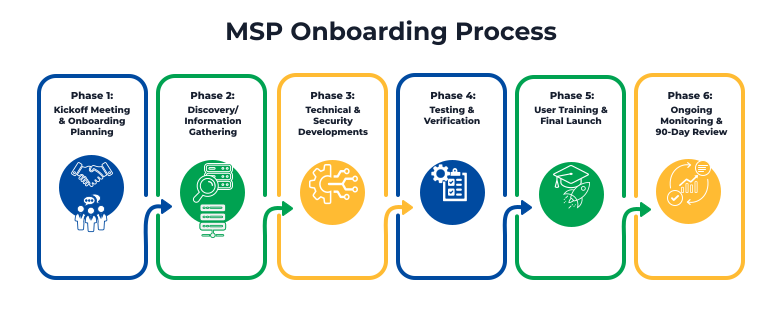
Following a proven onboarding process is crucial to help your clients maintain smooth company operations and lay the groundwork for a successful partnership.
What Cyber Insurance Requirements Do You Help Us Meet?
Cyber insurance is an essential policy to help businesses protect themselves from the financial fallout of a cyberattack.
Some security measures can actually reduce cyber insurance premiums, as they make the entire business less risky to insure.
Make sure the IT provider’s services align with standard insurance policy requirements like MFA and backups.
You’ll also want to work with a proactive MSP that can understand and respond to evolving insurance requisites. As the threat landscape changes, insurance companies may require additional controls and documentation each year in order for your clients to renew a policy.
Any MSP should be able to support insurance claims with the appropriate records and ensure ongoing alignment with changing standards. They should be able to monitor these industry shifts and adapt accordingly over time.
How Will You Support Our Growth & IT Roadmap Over the Next 3–5 Years?
The best IT providers aren’t simply putting out IT fires reactively, but proactively preventing them.
Beyond that, they’re constantly looking ahead to the future and assessing how they can help your clients build a comprehensive, competitive, forward-thinking IT strategy.
This can include evaluating cloud tools and upgrades, providing budgeting assistance for future technology implementations, and ensuring scalability as your clients’ businesses grow.
It’s best to work with managed IT providers who are strategic partners, not just a helpdesk, and committed to the success of your clients’ businesses.
Can You Provide References from Similar Companies You Currently Support?
Experience matters—the top managed service providers should have expertise working with other customers in your clients’ industries, and be able to produce references, case studies, and testimonials from them.
This real-world validation helps build credibility and verify that the provider’s actual performance lives up to your expectations.
Referrals also go a long way, as they establish trust and help demonstrate proven success.
Reach out to other fractional CFOs or other companies in your clients’ network about their experience working with specific MSPs.
Red Flags Fractional CFOs Should Watch For When Evaluating an IT Provider

Asking the right questions is only one part of evaluating an IT provider; you’ll also want to look out for common red flags that signal an MSP may not ultimately be a good match.
Keep these items in mind when talking to different MSPs to help gain a better picture of their operations and outlook.
No Clear Response Time
If a provider can’t share a clear response time, it indicates that something may be amiss.
Your clients will want to know their average response time for routine issues and security incidents. Every minute counts when dealing with a crisis.
This promise is the foundation of any agreement, as it ensures your clients know what to expect and have guaranteed levels of service.
Watch out for vague or ambiguous terms. If the provider can’t provide clear metrics, it may be a sign that the partnership won’t work out.
Key performance metrics and reporting should also be available throughout the partnership to hold the provider accountable.
History of Organizational Instability
The best MSPs should have years of experience providing service, reflecting their expertise and ability to retain customers.
Knowing the provider’s acquisition history and ownership structure can be valuable and indicate their capacity to provide high-quality service.
For instance, some of your clients may find that when their MSP is taken over by a larger business, service and response time suffers as a result.
Your clients should take time to research the reputation of prospective MSP partners to ensure they have a strong standing in their industry and a positive history of providing high-quality, reliable service.
Full Reliance On Third-Party Contractors
If an IT provider depends heavily on team members who aren’t full-time employees for all of their services, that may be a sign of a potential pitfall in the future.
Make sure your IT provider maintains proper oversight over their teams. Is there an established hierarchy? Is there a reliable escalation process that can be accelerated in times of need?
Understanding the team structure can help you decide whether the partner will be a strong match for your clients.
No Proactive Maintenance
Preventive measures are an indispensable part of any IT agreement; they protect your clients from expensive emergency fixes and ensure their systems continue to function well over time.
The best IT providers will include proactive maintenance as part of their service plans and support.
In the long run, proactively maintaining and updating systems is more predictable and cost-effective than completing emergency repairs during extended periods of downtime.
Make sure any IT provider who works with your clients is dedicated to proactive improvements.
Lack of Strategic Planning
Experienced MSPs should be able to provide ongoing consultation and guidance regarding IT systems, processes, and roadmaps.
A forward-thinking strategy is a necessity so your clients can stay up-to-date in a rapidly changing technological landscape.
Any recommendations should be based on current observations, industry shifts, evolving cyber threats, and technical innovations.
If a provider fails to provide future-oriented services or solutions, your clients may not receive the level of attention they deserve, affecting their ability to build competitive advantage.
No Cybersecurity Frameworks
Without a comprehensive approach to cybersecurity, your clients’ businesses may be more vulnerable to cyberattacks and other threats.
Managed service providers should have in-depth knowledge of the top security measures and access to sophisticated, specialized tools that enable fast detection, response, and containment.
These days, standalone antivirus software is nowhere near enough to protect against security threats. Businesses need a layered, multi-faceted approach to build the strongest defenses.
Your clients’ MSP of choice should have a 24/7 SOC (Security Operations Center) to identify, respond, and contain threats.
Make sure you gain clarity into whether the SOC is outsourced or part of the actual business. A third-party SOC may not be as invested in your clients’ day-to-day operations, whereas a fully integrated SOC will have greater familiarity and understanding of your clients’ environments.
24/7 monitoring is also an essential part of any IT or security partnership, so ensure providers have the capability to provide consistent oversight.
Locked-In Contracts Without Performance Metrics
If a provider wants to lock your client into an extended managed IT services contract without sharing key performance metrics or a simplistic exit strategy, it may be a sign of a risky partnership.
Long contract periods mean that your client can’t exit the relationship if the service isn’t living up to their expectations. This approach represents a major cost without much benefit.
Look for providers that don’t force your clients to sign long-term contracts just to retain their business. During the evaluation process, make sure the company shares valuable reports about their response time, support tickets, and other metrics.
Working with a month-to-month provider is often a less risky choice for your clients.
Misaligned Company Culture/Values
Encourage your clients to work with providers that align with their businesses in terms of company values and beliefs.
For instance, if your clients pride themselves on fast response time, it wouldn’t make sense for them to partner with a provider that didn’t take speedy response and follow-up seriously.
When your clients and their service providers share the same goals and vision, it can build stronger partnerships and ensure better collaboration.
In the long run, company alignment can help your clients’ MSP become seamlessly integrated into the fabric of their business, instead of functioning as an unfamiliar third-party vendor.
CFO Checklist: What a High-Quality IT Provider Must Deliver
Use this IT provider checklist to help vet potential IT partners; the top companies will have each of these items in place.
- 24/7 Security Operations Center (SOC): Does the company provide consistent monitoring to protect your systems against cyber threats?
- No Long-Term Contracts: Does the company utilize short-term contracts?
- Documented IT Strategy Plan: Does the IT provider work to help with overall IT strategy and plans for growth?
- Transparent Reporting: Are ongoing performance monitoring and metrics available to evaluate the effectiveness of the service?
- Onsite & Remote Support: Can the provider assist your clients both remotely and in person at each of their office locations?
- Compliance Expertise: Does the MSP have in-depth knowledge of relevant compliance standards and how to ensure proper alignment with company systems and processes?
- Proven Onboarding Process: Does the IT provider have a documented, detailed onboarding plan that minimizes disruption and downtime?
How Miles IT Supports Fractional CFOs
As a best-in-class IT provider helping businesses nationwide, Miles IT supports fractional CFOs in their journey to help clients minimize risk and develop smart, forward-thinking IT strategies.
We offer 24/7 security operations, with proactive monitoring and endpoint protection to ensure our customers are well-defended against cyber threats. Risk assessments are another essential service offering; we help clients uncover and mitigate vulnerabilities through security posture assessments, penetration testing, and more.
Our experts also provide governance, risk, and compliance advisory services, helping businesses ensure their systems and processes align with regulatory requirements. For customers preparing for audits, we can assist with documentation, testing, and evidence collection to streamline the process.
IT strategy is also an important part of our services, as we seek to help customers implement the best solutions to maintain a competitive advantage and improve their delivery of services and products.
With a proven track record, fast response time, and ability to provide local support, Miles IT is ready to provide excellent IT services to businesses of all sizes.
Final Thought
Choosing an IT provider requires careful planning and research, but it doesn’t have to be overwhelming.
With these questions in mind and a sincere knowledge of what your clients need, you can guide them to choose the best provider possible for their business.
Remember to prioritize IT providers with a strong track record, fast response, industry & compliance expertise, and dedicated teams; your clients should receive personalized attention from their MSP of choice.
Help your clients make the most informed decision so they can choose an IT partner that positively impacts their operations and grows with their business.
Frequently Asked Questions
What questions should a fractional CFO before choosing an IT provider?
A fractional CFO should focus on asking questions that influence their clients’ operations and strategic outlook. They should seek the utmost transparency regarding plan coverage, response time, ongoing performance evaluation, and team structure.
They should also make sure the IT provider has the cybersecurity and compliance expertise to adequately serve their clients.
Evaluating the provider’s ability to complete a seamless onboarding process and support long-term growth is another essential component.
Finally, fractional CFOs should pay attention to references; these referrals can provide clarity into the value of the partnership and whether it will be a good fit for their client.
How can a fractional CFO evaluate whether an IT provider is reliable?
A fractional CFO can evaluate the reliability of an IT provider by assessing reviews, testimonials, and success stories, as well as speaking with references.
Another option is to review the vendor’s documentation, proposals, and contracts for transparency, guarantees, and partnership information. Taking a careful approach helps build understanding of possible red flags like long-term contracts or lack of performance metrics.
Use our IT provider checklist above to help evaluate potential partners.
What are the biggest risks of choosing the wrong IT provider?
Choosing the wrong IT provider can sometimes lead to long-term, expensive managed IT services contracts; slow response time; poor cybersecurity prevention; and lack of compliance expertise.
Your clients may lose money if they work with a provider that doesn’t reply fast enough to incidents. With the cost of downtime for small businesses being $427 per minute, these costs can add up fast. If an IT provider can’t get you back up and running in an hour, that leads to a $25,620 downtime cost.
Poor cybersecurity and minimal compliance expertise can also open your clients up to risks like cyber threats and regulatory penalties. Your clients will want to make sure their providers are skilled in each of these areas to reduce the risks of cyberattacks and ensure adherence to regulatory standards.
Should fractional CFOs recommend a local or national IT provider?
It depends on your clients’ needs; some companies are fully remote and don’t need an onsite presence at all. On the other hand, some organizations that follow hybrid models or remain in person may require lots of onsite support.
Take your clients’ unique needs into account before recommending providers. Ideally, their provider of choice can handle remote needs as well as onsite needs.
How do I measure ROI from an IT provider?
When measuring the ROI of an IT provider, you’ll want to compare the costs of building an internal IT team from the ground up.
For instance, Arctic Wolf found that building an internal Security Operations Center could cost businesses at least $1 million.
Many businesses find that they gain access to specialized expertise at a fraction of the cost by working with an external IT provider while also gaining more predictability in their IT budgets.